Scuba diving in Portobelo: a guide to planning your trip
Coral, walls and history on Panama's Caribbean coast, an hour and a half from Panama City.
- 1.5 hoursfrom Panama City by road
- Year-roundbest months: May, August, September and October
- Drake Islanda few minutes by boat from Portobelo
- UNESCOthe forts have been a World Heritage Site since 1980
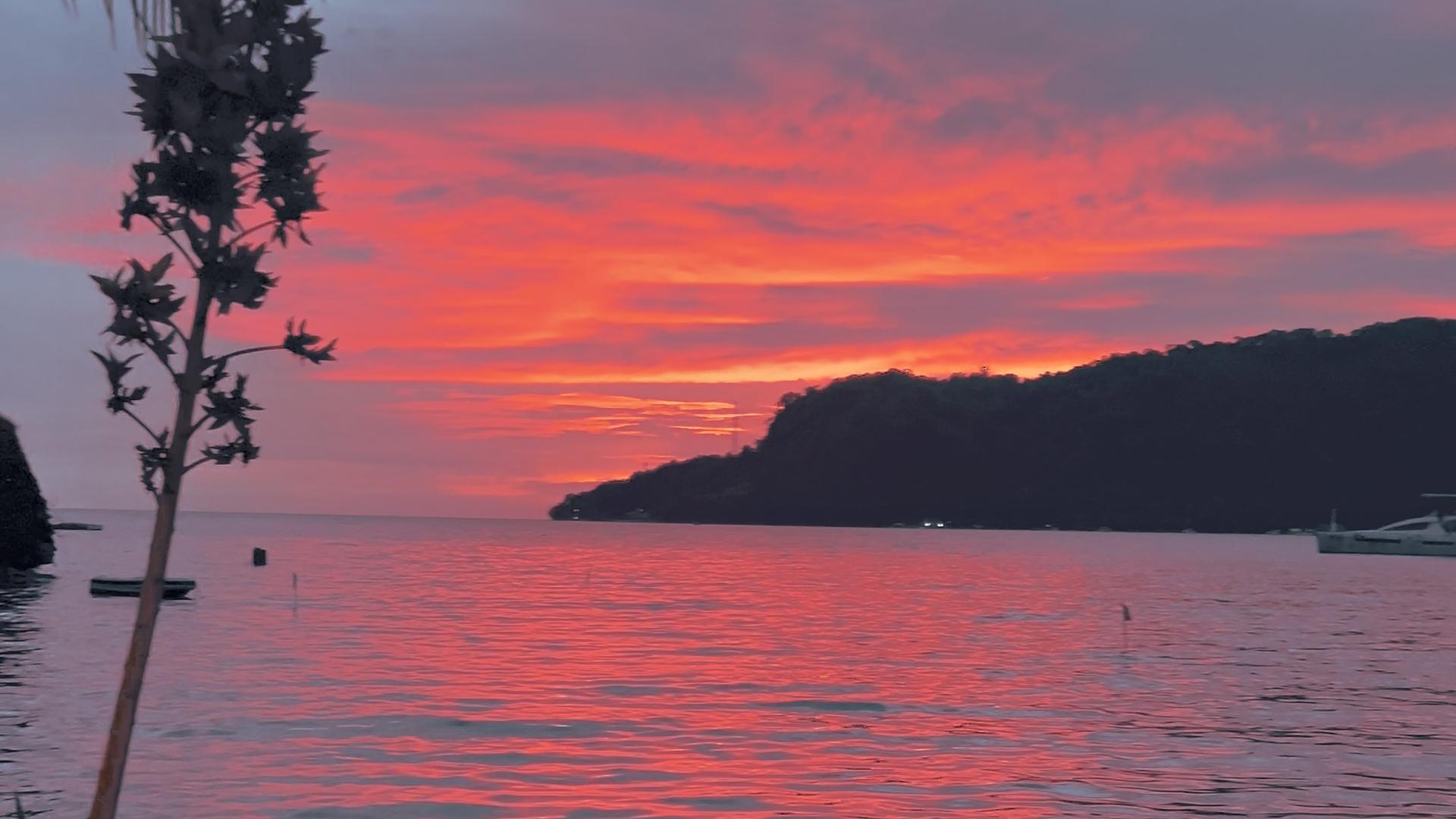
Portobelo, where we head out from
 Our dock
 The town, steps from the center
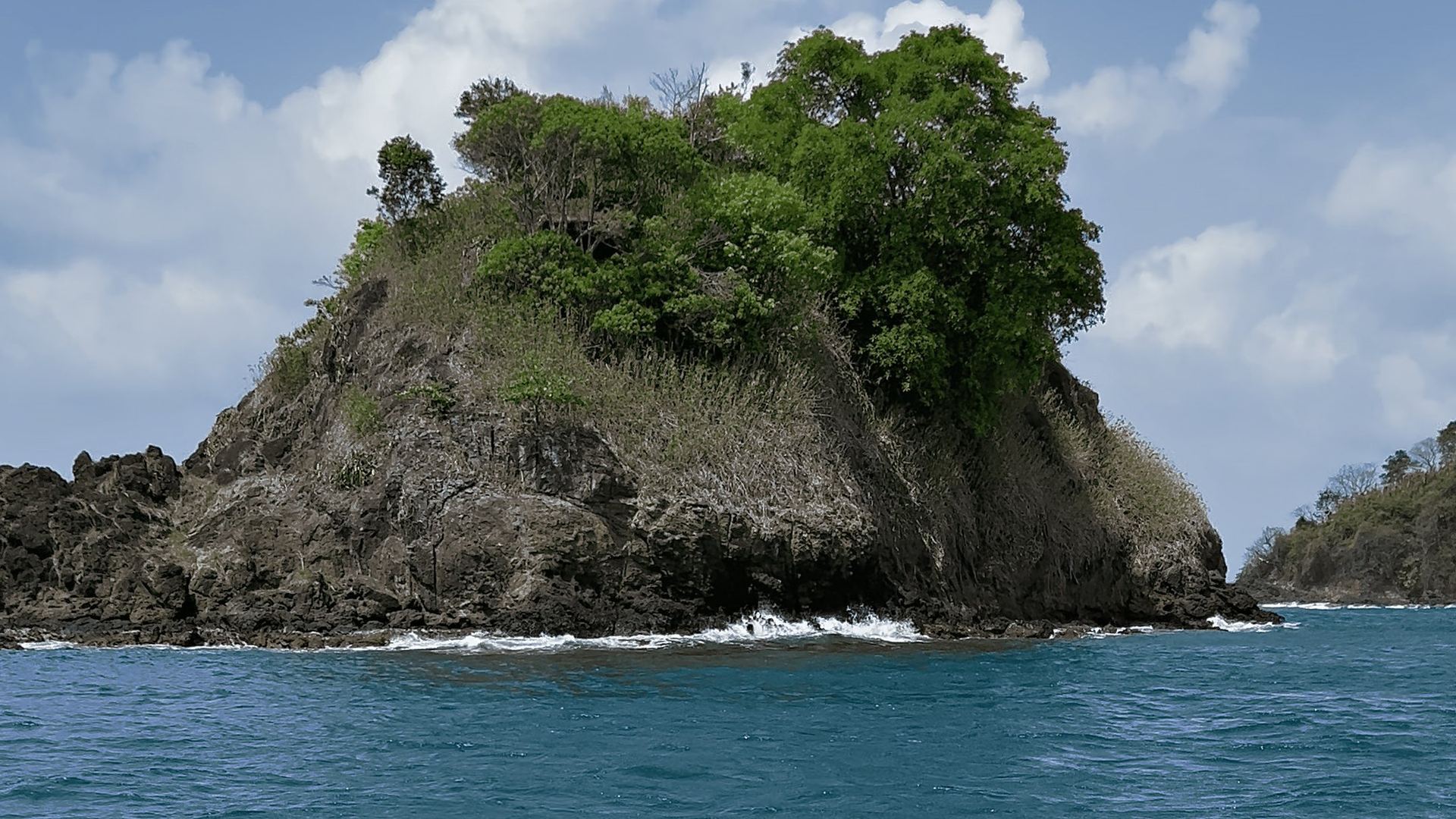
 On the way to the dive site
 And a good breakfast
Why dive in Portobelo
If you're comparing destinations, scuba diving in Portobelo has a clear advantage: it's close. Portobelo is one of the closest Caribbean trips from Panama City, so you get here by road in about an hour and a half.
Portobelo also works for different levels. DiveIn's guide recommends it for new divers during its calm seasons, and there are options here from your first dive up to tec courses.
Portobelo is about coral, walls and reef life, and it also has a history you can visit on land.
What you'll see underwater
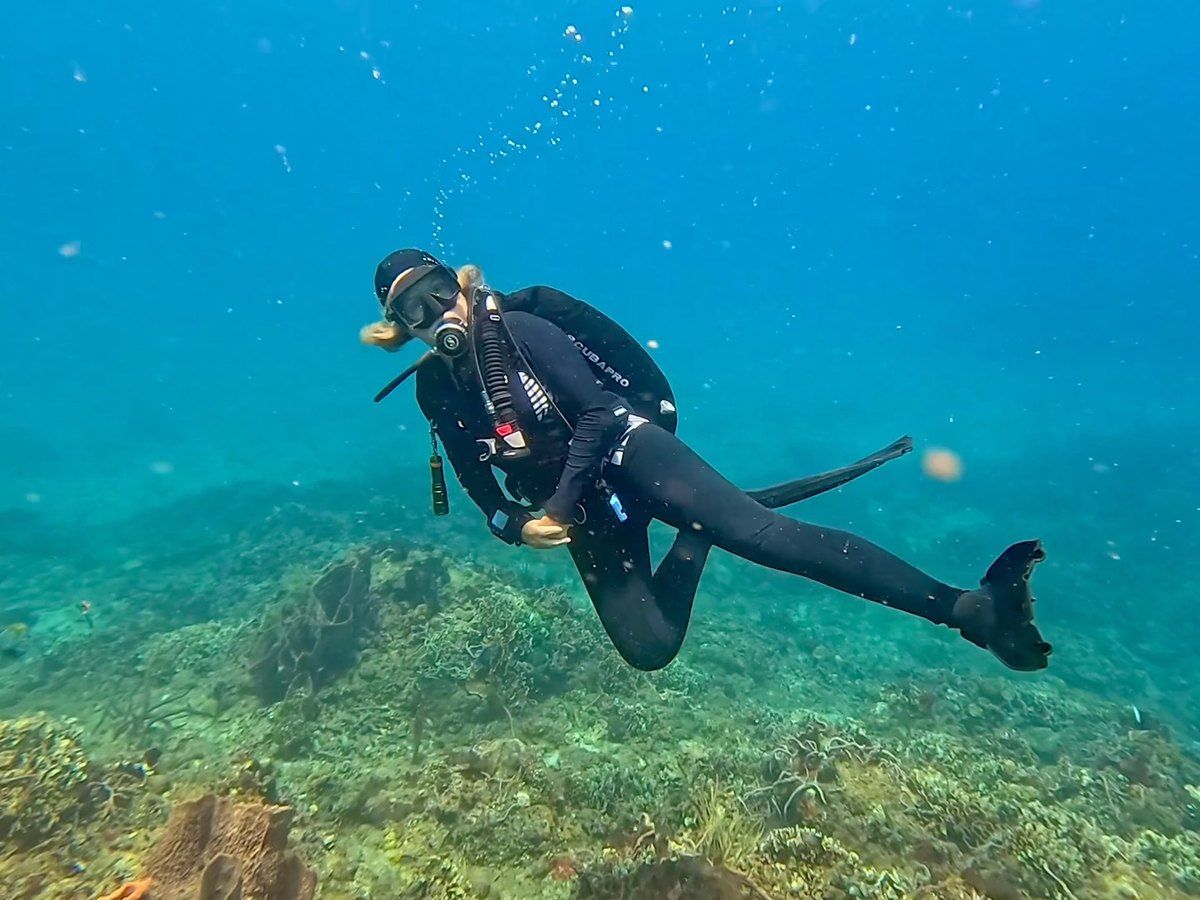
What comes up again and again is very colorful coral. Visit Panama, the country's tourism site, mentions lettuce, fire, brain and elkhorn corals, along with gardens of giant sponges.
In their reviews, this is what our customers say they saw diving with us:
- A coral wall, with schools and fish of many colors.
- Scorpionfish, rockfish, parrotfish, moray eels, lobsters and schools of snapper.
- Jawfish and Caribbean reef fish.
- Squid and crabs.
- A canyon, on one of the dives.
Visit Panama also mentions turtles and eagle rays. Turtles aren't very common here, so seeing one is a gift. Our YouTube channel has a video of Nelly, a nurse shark from Drake Island that shows up now and then. None of this is guaranteed: it's the ocean.
When is the best time to dive in Portobelo?
You can dive in Portobelo year-round. The best months are May, August, September and October, and the species you see change with the season.
Álvaro puts it this way in a 2022 video (in Spanish): May is usually “our clearest month,” with very clear, fairly calm water. In the first quarter of the year there is less rain and the rivers carry no sediment into the sea, so in most cases there's some good visibility, but the trade winds come in and bring surge, a back-and-forth under the water that he compares to “a little spoon stirring the sugar in your coffee.” When the trade winds ease and the rainy season starts, May arrives, “our fabulous month.” The other good season runs from mid-August to the end of October.
Visit Panama explains why August and September are so good even though they're rainy months: hurricane season, farther north, takes the wind away and leaves the sea off Panama calmer. DiveIn marks those same two months as the best window.
Visibility drops when it rains or when the sea gets rough, and the Frommer's guide points to December through February as the time of rough seas. One customer told us visibility was about 15 m (50 ft) at Drake Island on a rainy, windy day.
Visit Panama puts the water at about 27 °C (81 °F). For Drake Island, PADI recommends a wetsuit, a dive computer and a surface marker buoy.
The exact site is confirmed the same day, based on the weather, water clarity and currents. If conditions aren't safe, we reschedule your trip.
History: forts, fairs and Francis Drake
Portobelo was founded on March 20, 1597, as the Caribbean terminal of the route across the isthmus, replacing Nombre de Dios. Famous fairs were held here, and it was one of the main ports in the Caribbean.
To protect it, Spain fortified the bay based on plans Bautista Antonelli drew up in 1586. Parts of San Fernando, San Jerónimo and Santiago still stand today, and you can visit them, along with a museum. San Jerónimo and Santiago are in town; San Fernando, across the bay, is reached by boat.
The fortifications of Portobelo and San Lorenzo have been a UNESCO World Heritage Site since 1980. Since 2012 they've also been on the List of World Heritage in Danger because of their deterioration, and they're still on it.
Francis Drake died on January 28, 1596, off Portobelo and was buried at sea in a lead coffin. Visit Panama passes along the legend that the remains of his sunken ship lie around this area, at about 21 m (70 ft). It's a legend, not a site we can promise you.
PADI mentions a pirate-era anchor at Drake Island. In Panama, historical remains underwater are protected by law, so you look at them and leave them where they are.
How to get here
Portobelo is about 1.5 hours by car from Panama City. Here's the route:
- Take the Panama-Colón Highway and, at kilometer 47, exit toward Sabanitas.
- At the next Y-shaped intersection, turn left.
- Continue to the Rey supermarket and turn right onto Vía Portobelo.
- The center is in town, facing Portobelo Bay. You can see Drake Island from the entrance to town.
By public transport, take a bus from Albrook Terminal to Sabanitas and change there to another bus to Portobelo. Visit Panama, which gives the route through the Colón bus terminal, puts the bus trip to Portobelo at about 2.5 to 3 hours (checked on November 25, 2026).
If you'd rather not drive, we can arrange transportation from your hotel: the driver picks you up, waits and brings you back, for $180 round trip per group. Let us know in advance.
A tip from one customer: if you don't know Panama's roads, leave with time to spare so you can arrive without rushing and find a place to park.
Where we dive
The Portobelo sites we head to most, all within 8 km of our center.

- Dos Hermanas
- Mogote
- Punta Sabanilla
- Chicken Point
- Salmedina
- Isla Drake
- Buenaventura
Illustrative, not for navigation. Data: © OpenStreetMap contributors, NASA SRTM.
Dive sites in Portobelo
Distances are approximate: measured by water from our center, on our map.
Drake Island
About 3.3 km (by boat) from our center
Portobelo's best-known site, and the one you see from the entrance to town. PADI describes four dive spots, with reef, sandy bottom and wall, plus a pirate-era anchor. DiveIn puts most dives between 9 m (30 ft) and 21 m (70 ft), with little current, though the outer faces can be livelier.
Salmedina
About 4.5 km (by boat) from our center
Visit Panama includes it among Portobelo's recommended spots. A dive club that has posted videos of the site describes it as a drop-off with abundant coral reef.
Chicken Point
About 5.6 km (by boat) from our center
One of the spots in the area that Visit Panama recommends.
Mogote
About 7 km (by boat) from our center
Dos Hermanas
About 7.6 km (by boat) from our center
A customer who dove with us says the corals near Dos Hermanas have spectacular color, even on hazy days.
Punta Sabanilla
About 7.8 km (by boat) from our center
One of the spots in the area that Visit Panama recommends.
Tres Hermanas
Visit Panama mentions it as one of the deepest spots in the area.
Pared de Huerta and Reef 2 Reef
Visit Panama recommends both. Reef 2 Reef is a restoration project where scientists and volunteers have planted corals to create new colonies.
Isla Padre and María Soto
Other spots in the area that Visit Panama recommends. Ask us which ones are planned for your date.
Choose your dive
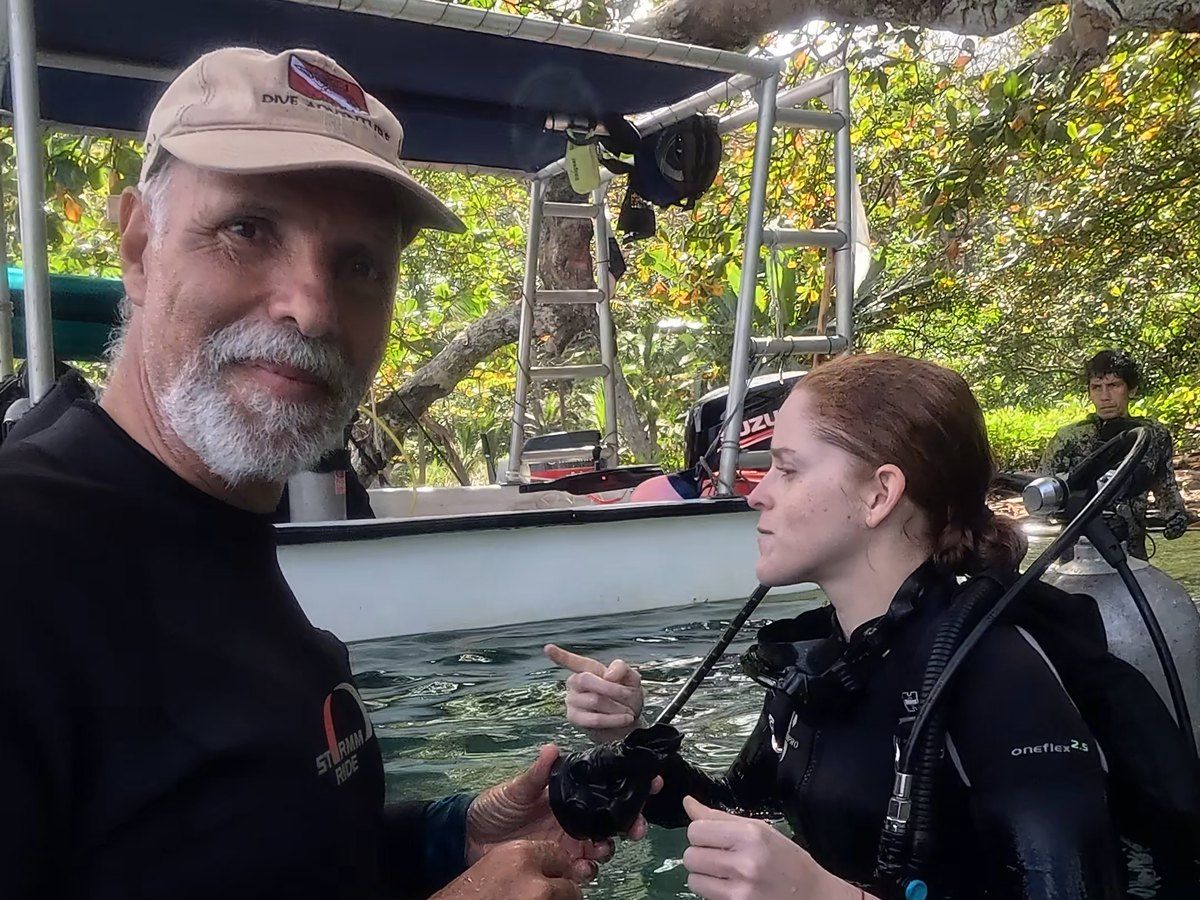 Most popularDiscover Scuba DivingFor first-time diversHalf dayNo experience needed$120per personGearInstructorBoat + tanksBook now
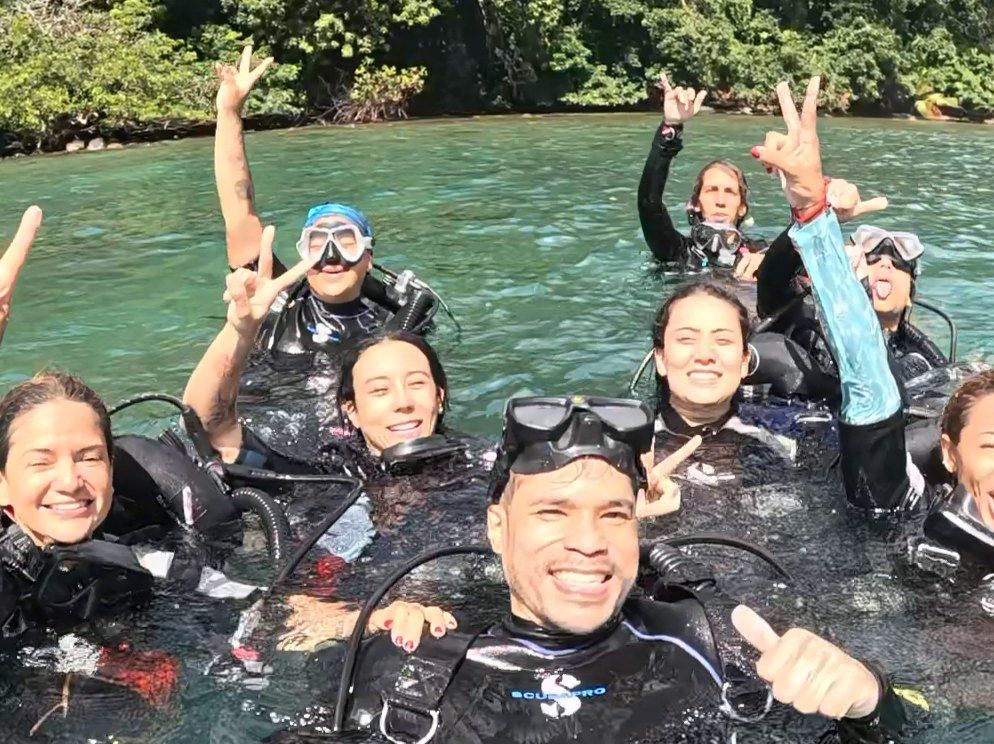 For certified diversDive & ChillGuided 2-tank dive tripHalf dayGear rental extra$110per personGuideBoat + tanksBook now
 Full certificationOpen Water DiverBecome a certified diver for lifeTheory + practiceNo experience needed$540per personGearInstructorBoat + tanksStart course
How to get here
About 1.5 hours from Panama City
By car
- 1Take the Panama-Colón Highway.
- 2At kilometer 47, exit toward Sabanitas.
- 3At the next Y-shaped intersection, turn left.
- 4At the Rey supermarket, turn right onto Vía Portobelo.
- 5We are on Portobelo Bay.
By public transport
- 1Take a bus from Albrook Terminal to Sabanitas.
- 2There, change to a bus to Portobelo.
We offer hotel pickupLeaves your hotel at 6:30 am · $180 round trip per group
Arrange pickupFrequently asked questions
Do I need to be certified to dive in Portobelo?
Not for your first dive. If you've never dived, Discover Scuba Diving ($120, gear included) doesn't require certification: you practice in a controlled setting, then go down into the sea with an instructor. For the daily Dive & Chill trips ($110, gear extra, two guided dives), you do need Open Water Diver certification or equivalent.
When is the best time to dive in Portobelo?
The best months to dive in Portobelo are May, August, September and October. Still, you can dive year-round, with different species depending on the season.
Can I dive in Portobelo on a day trip from Panama City?
Yes. It's about 1.5 hours by road. You arrive at the center at 8:00 am (8:30 if you're already certified), the boat leaves at 9:45 am and you're back at the center around 1:00 pm. If you don't want to drive, we can arrange transportation from your hotel for $180 round trip per group.
What happens if the weather is bad on the day of my trip?
Safety comes first. If conditions aren't safe for diving, we reschedule your trip.
How long should I wait to fly after diving?
PADI publishes these minimum waits: 12 hours after a single dive with no decompression stops, 18 hours after several dives in a day or several days of diving, and 24 hours after dives with decompression stops. Our advice is to wait 24 hours whenever you can, which is also PADI's general recommendation. And if your dive computer shows a longer no-fly time, follow it.