First steps
Do you need to swim to scuba dive? Swim test and fitness
By Álvaro Silva · · 10 min read
Yes, you need to know how to swim to get certified as a diver, but you don't have to be a great swimmer. PADI asks you to swim 200 meters nonstop, or 300 with a mask, snorkel and fins, and to stay afloat for 10 minutes, with no time limit and any stroke you like. To try diving with Discover Scuba Diving there is no swim test: you just need to feel comfortable in the water. In more than 35 years as an instructor, I've taught everyone from swimmers who train every day to people who were afraid of the water. And I'll tell you something else: swimming isn't just a requirement, for me it's the best training a diver can do.
Video in Spanish
Do you need to know how to swim to scuba dive?
Yes, to get your dive certification you have to know how to swim, even if it's just the basics. Every dive agency requires it, not just PADI.
PADI sums it up in three requirements for the Open Water course: being able to swim, being medically fit to dive and being comfortable in the water. Nobody expects competition-level swimming. What matters is that you can handle yourself at the surface on your own.
All kinds of people sign up for the Open Water course. Sometimes it's a swimmer who trains every day, and most likely their course will be spectacular. Sometimes it's a young guy who grew up on the river, catching shrimp and breath-hold fishing: for him, the course is very easy. And sometimes it's someone who was afraid of the water for a long time and decides the Open Water is the tool to lose that fear and enjoy the sea.
How far do you have to swim for scuba certification?
In the Open Water course you swim 200 meters nonstop, or 300 with a mask, snorkel and fins, and you stay afloat for 10 minutes without any aids.
There's no time limit, and you can use any stroke you like. For the 10 minutes you can float on your back or face down, stay upright treading water with your arms and legs, or dog paddle: whatever works for you. It's not a race. It's proof that you can take care of yourself in the water.
As you move up the levels, swimming matters more. In one Divemaster course I taught, three weeks and 36 dives long, I caught the guys by surprise with the first long swim in full gear, and that's when they realized that becoming a Divemaster was no joke. This table compares what PADI asks of you in the water at each step:
| Step | Swim | Staying afloat | Note |
|---|---|---|---|
| Discover Scuba Diving | No swim test | Feel comfortable in the water and stay at the surface | Not a certification |
| Open Water Diver | 200 meters nonstop, or 300 with mask, snorkel and fins | 10 minutes without aids | No time limit and any stroke you like |
| Divemaster | 400 meters nonstop, and 800 with mask, snorkel and fins | 15 minutes, in just a swimsuit | Plus towing a diver 100 meters |
Can you scuba dive without knowing how to swim?
You can try diving with Discover Scuba Diving, which has no swim test, but you can't get certified without knowing how to swim.
PADI puts it plainly: for the Discover you don't have to be an Olympic swimmer, but you do need to feel comfortable in the water and be able to stay at the surface. You have an instructor at your side the whole time. And if you go on to the Open Water afterward, that's when the swim test comes in.
Some people come to diving because someone talked them into it, without being big fans of the water, and others had a bad experience in the water and use the course to get over it. When someone in a group is slower, I give them the attention they deserve. I don't let the group pressure them: their classmates become their cheerleaders, a divemaster keeps an eye on them and we let them find their way little by little.
Do you have to be a good swimmer to scuba dive?
No. Diving isn't about swimming fast: it's about moving slowly and relaxed, using your legs, almost the opposite of a competitive swimmer.
PADI explains it like this: swimming hard shortens your dive. Experienced divers move slowly and use their legs more than their arms.
But knowing how to swim does matter, because of what happens at the surface. Every dive starts and ends up top, and it isn't always calm up there. You can drift a little away from the boat and have to fight a current the wind has kicked up. In the open ocean there is almost always current, and believe me: the current doesn't get tired.
You can also get a cramp. To avoid one, stretch your legs, waist, back and neck before you get in, and kick with straight legs or use a frog kick. If you start pedaling like you're on a bike, you're setting yourself up for a cramp in the next few minutes.
In those moments, swimming is what gets you out of any jam. I once swam 1,000 meters in full gear, breaststroke, with a group of commercial diving students, and I demand a very high level of fitness from them. Breaststroke is the stroke that gets you back to a boat fast.
How fit do you need to be to scuba dive?
You don't need to be an athlete, but you do need to be in shape: even for a Discover, PADI asks for at least average physical fitness.
Diving is relaxing, but it has moments that take strength. In round numbers, your gear puts about 30 kilos (66 lb) on your back, and in technical diving it's much more. Carrying that weight, you have to walk along the shore or down a dock, or climb the boat ladder. If you aren't strong, the gear can injure you.
Underwater, cardio comes into play. If you're in good cardiovascular shape, your breathing rate barely changes even when you have to swim against a current, and when you rest you recover much faster. I've seen sedentary divers with spectacular air consumption in still water, and it only takes a little current for them to lose it. I've also noticed that overweight people use much more air than people at a healthy weight.
If you're already a diver, there's a test that tells you a lot: properly weighted and with an empty BCD, stay at the surface finning gently or sweeping your arms out. If you don't get tired, you're doing fine. The effort of staying afloat should feel like the effort of walking.
And before any course you fill out PADI's medical statement. A yes doesn't mean you can't dive: it means you need a doctor's approval before you get in the water.
What is the best exercise for scuba diving?
Swimming. For me it's the king of disciplines for a diver, because water is our element and swimming works every muscle in the body.
Diving itself doesn't build your cardiovascular fitness, so you have to train it during the week. I ran for a long time, until my lower back started to bother me. Then I stepped up my swimming, and you have no idea how good I feel now when I have to move at the surface or do a skill with one or two strokes.
In my residential complex there's a small pool, about 10 or 12 meters (33 to 40 ft) long and a meter and a half (5 ft) deep. So I don't have to keep turning around, I bought a belt that goes around my waist, with an elastic cord that ties to a post near the edge. That way I swim without moving forward: it's an endless swim, by time and not by distance. The first cord I bought was meant for semi-Olympic pools, and I had to double it up to get the tension I needed. This is my routine, which takes me more than 40 minutes in the water:
- A few stretches, then 15 minutes of nonstop swimming to warm up. I breathe every two strokes, switch to every three and go back to every two.
- Ten hard intervals against the cord, trying to reach the other end of the pool, with a rest between each one. First front crawl, then breaststroke.
- Once I'm out of the water, push-ups, pull-ups and sit-ups.
- If you don't have a pool nearby, combine jogging, cycling, skating or long walks with strength exercises.
- Weights twice a week. They make you stronger, they strengthen your joints, and one day you realize the gear doesn't feel heavy anymore.
What exercises help you climb back onto the boat?
Pull-ups and parallel bar dips. They're the two basic exercises I do to climb onto a boat comfortably, with or without a ladder.
Getting out of the water takes strength: you have to grip the ladder hard, put some muscle into your legs, walk through the boat with your gear on and get to your spot. And some boats have no ladder, so you have to push yourself up and over the gunwale. I train at the playground in my residential complex, always with gloves, because if your palms aren't protected you don't perform as well hanging from the bar.
For me, a diver's self-reliance is fundamental. If you get to the boat anxious, wondering how you're going to climb up and who's going to help you, you lose that self-reliance. And if one day you have to swim, tow someone or help a tired diver, you're going to have a really hard time if you're out of shape. My advice is always the same: stay in shape during the week, and on the weekend, dive, dive and dive.
Learning to dive in Portobelo
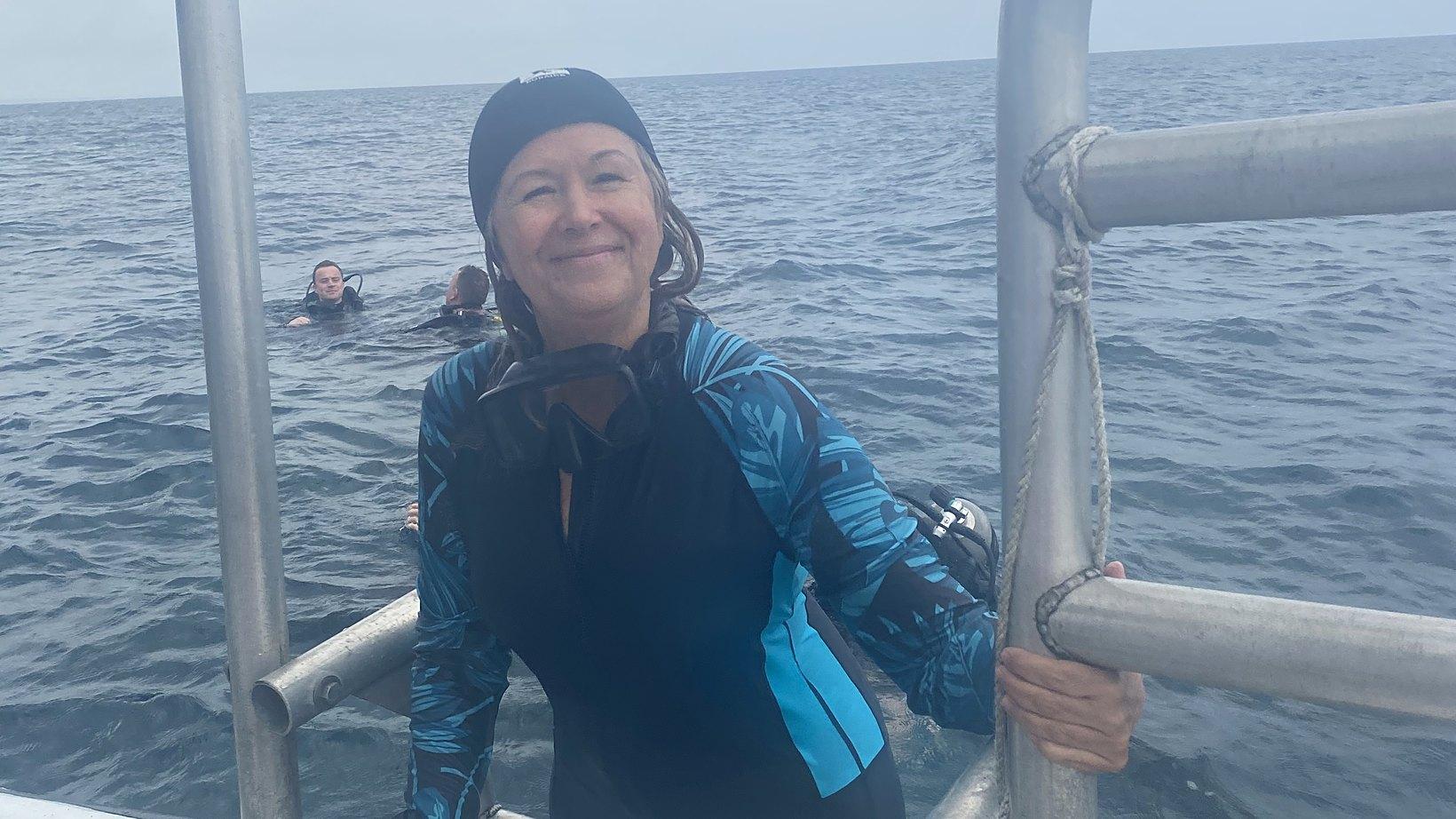
At Panama Dive Adventure, in Portobelo, we follow PADI's rules. In the Open Water we do the swim and float test PADI requires, with no stopwatch and with whatever stroke works for you. The course costs $540 and includes the theory through PADI eLearning, the certification and the gear. You pay in two parts: $230 for the theory and $310 the day before the practical training.
If you're not sure yet whether diving is for you, start with Discover Scuba Diving: it costs $120 with gear included, it's for ages 10 and up and it has no swim test, as long as you feel comfortable in the water. We head out every day at 8:00 am and get back around 1:00 pm; for the Discover you need to be at the dive center at 8:00. Courses have at most six students per instructor, in Spanish or English. If you're unsure about your swimming, message us on WhatsApp before you book and we'll talk it over.
Sources
- PADI: Open Water Diver, health, swimming and age requirements
- PADI: certification FAQ (do you have to be a good swimmer?)
- PADI: Discover Scuba Diving, requirements
- PADI: Discover Scuba Diving FAQ (swimming and physical fitness)
- PADI: Divemaster course requirements (swim tests)
- PADI: the top 10 scuba diving myths (you don't have to be an excellent swimmer)
- PADI and UHMS diver medical questionnaire, in Spanish (PDF)
- My video (in Spanish): Preparación física y mental para el buceo
- My video (in Spanish): Nutrición y buceo, ¿qué debes comer para rendir al máximo?
- My video (in Spanish): ¿No te puedes subir a un bote sin escalera? Haz estos 2 ejercicios
- My video (in Spanish): Cómo quintuplicar tus habilidades de buceo, ejercicios especiales
- My video (in Spanish): ¿Cuándo deberías hacer tu curso avanzado y de rescate?
- My video (in Spanish): Usa esto para mejorar tu buceo
- My video (in Spanish): 5 tips esenciales para ser un mejor instructor de buceo
- My video (in Spanish): Así se ve el curso de Divemaster internacional