Gear
SMACO mini scuba tank: what it's for and how long it lasts
By Álvaro Silva · · 10 min read
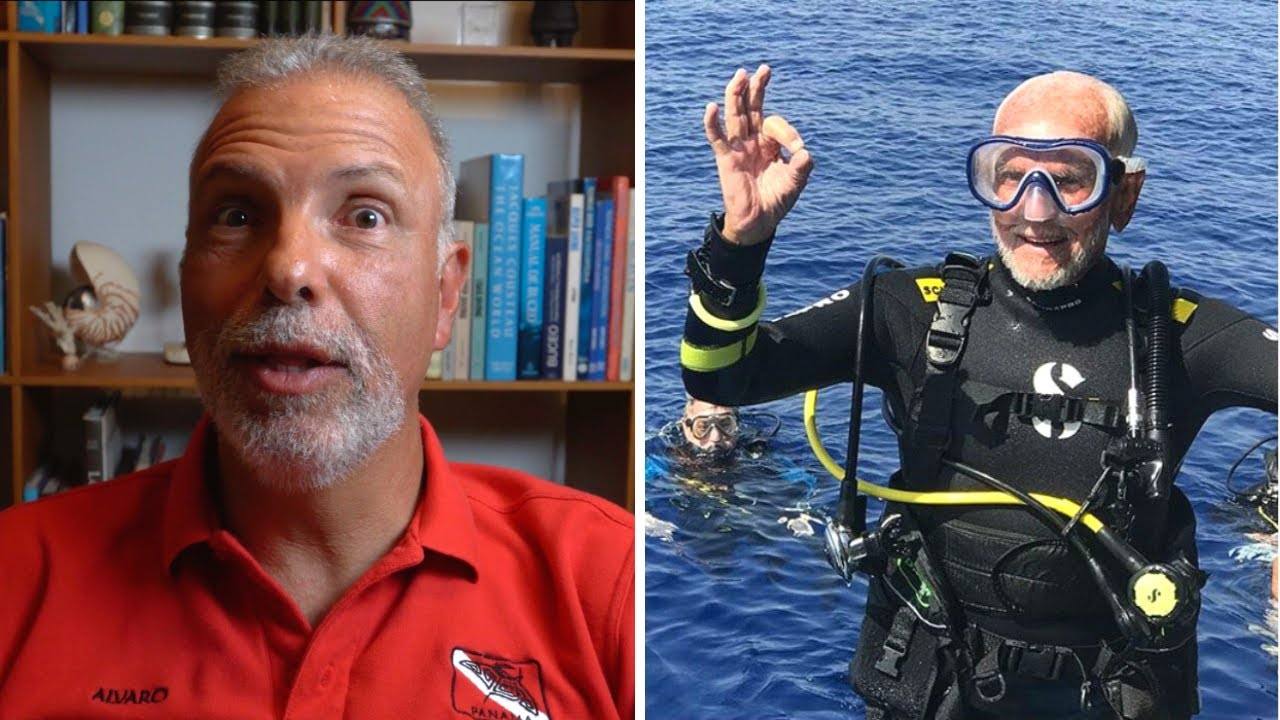
A mini scuba tank is for a quick emergency or for going down for a couple of minutes, not for an actual dive. I say this after testing a one-liter SMACO in the sea, one they sent me from China to review on my channel. I've been diving since 1978, I've been an instructor for more than 35 years and I've owned several of these little bottles: I've tried them out and gotten plenty of use out of them. I've even kept one on the boat. It's a fun little toy, but you need to be clear about what it's for and what it isn't.
Video in Spanish
What is a mini scuba tank?
It's a small bottle of compressed air with its own regulator, meant as an alternate air source. PADI calls bottles of 1 to 4 liters reserve bottles, while a main tank runs from 6 to 15 liters or more.
The one I tested is SMACO's one-liter model. The people at SMACO got in touch to ask if I wanted to review their product, and since the channel is open to everyone, I said yes. It came from China by DHL right to my front door, and I opened the box on camera, seeing it for the first time.
It comes completely disassembled, but putting it together is extremely simple. The tank valve is also the regulator's first stage, and the knob opens or closes the air supply. When you install it, the o-ring needs silicone grease. This is what I found in the box:
| Part | What I saw |
|---|---|
| Tank | 1 liter, 200 bar working pressure |
| Valve | Doubles as the first stage: unbalanced piston, a single port and a filter |
| Pressure gauge | Very small, with its high-pressure hose |
| Second stage | Compact, with a purge button and a standard mouthpiece |
| Hose | About 80 cm (31 in): longer than a standard regulator hose, shorter than the 1 m (39 in) hose on an octopus |
| Filling | Quick-connect adapter, the same as the one on paintball guns |
| Accessories | Instructions, a wrench, two spare o-rings and a pouch for hanging it |
What is a mini scuba tank used for?
It's for handling a quick emergency or a short, shallow job. Anything beyond that, no.
I'm not a big user of these small bottles, but I know them well. These are the uses where I do see the point:
- Freeing the anchor. I've kept one on the boat for when the anchor gets stuck and we've all already taken our gear off up top. That way nobody has to go down holding their breath.
- Cleaning the hull of a small boat.
- Snorkeling and going down to the bottom for a minute or two to take a few photos or a selfie.
- Carrying an alternate air source for a quick emergency, as long as you know how to use it.
How long does a mini scuba tank last?
Not long at all. A one-liter tank filled to 200 bar holds about 200 liters of air, and that's enough to get you out of an emergency, not to stay down.
According to the manufacturer's specs, those 200 liters get you up from 30 m (100 ft) in an emergency, with a direct ascent. Keep in mind that at 30 m (100 ft) you're at 4 atmospheres of pressure, and each breath uses four times as much air as at the surface. That's why that little bottle is for an ascent, nothing more.
In another video I talked about the smallest redundant air bottles and said the same thing: what you're left with is air to go up. When snorkeling, in shallow water, I would use it to go down for a minute or two.
What is it like to breathe from a mini scuba tank?
It breathes pretty well, like a regular octopus. There's some resistance, and there should be, so the regulator doesn't free-flow.
I tested it in the sea at about 5 or 6 m (16 to 20 ft). The most comfortable position I found was with the tank around my waist: I'm 1.90 m (6 ft 3 in) tall, and the strap was too short to wear it across the middle of my back. In my case, to go down like that all I need is a weight belt with 2 kg (4.4 lb) of lead, plus neoprene shorts and a rash guard, which is what we wear to dive in Panama when the water is between 29 and 30 °C (84 to 86 °F).
The feeling of freedom is really nice. You can run the hose under or over your arm. It isn't very flexible and mine stayed bent, but that didn't bother me at all. With good buoyancy you can do short swims, and for going down to take the odd photo it's more than enough.
That said, it doesn't have the sensitivity of a main regulator. And it has to be that way, because it's a regulator you won't keep in your mouth all the time.
Is a mini scuba tank filled with oxygen?
No. A recreational scuba tank, small or large, holds compressed air, with about 21% oxygen and 79% nitrogen.
A lot of people search for it as a mini oxygen tank, but PADI explains it clearly: recreational diving never uses pure oxygen, because under pressure it becomes toxic. The maximum accepted depth for breathing pure oxygen underwater is 6 m (20 ft).
The tank I tested is filled from a regular scuba tank, so it holds air, just like the rest of your gear.
How do you refill a mini scuba tank?
You fill it from a full scuba tank, by equalizing the pressures. The one I tested is refillable and comes with a quick-connect adapter, the same as the ones on paintball guns.
You pull the ring down, connect the adapter, check that it's locked on properly, open both valves and wait for the pressure to equalize. It's the same principle as the alternate air sources that have been around forever. There's nothing new about it, but the design is neat and the finish looks nice.
Like any scuba tank, it needs looking after:
- Fill it only with diving air, which is filtered air, from a properly filled tank. Never with oxygen.
- Put silicone grease on the o-ring every time you install it.
- Give it a visual inspection once a year. The pressure test, the hydrostatic test, is due every two to seven years, depending on the country.
- Always store it with some air inside, so no moisture gets in.
- Check the gauge before you use it. It's so tiny that those of us who need reading glasses can barely see it.
Are mini scuba tanks safe to use without a course?
I don't recommend it. With a mini tank you breathe compressed air underwater, the same as with a big tank, and that takes training. I've always said it on my channel: you don't learn to dive on the Internet.
The golden rule is never hold your breath. As you go up, the air in your lungs expands, and breathing normally lets it out. PADI also points out that the biggest pressure change is near the surface, so even a short trip down with a snorkel and a mini tank means you need to know what you're doing.
You also go up slowly, no faster than 18 m (60 ft) per minute, and at the end of every dive the recommendation is a three-minute safety stop at about 5 m (15 ft). With a one-liter bottle, there's very little margin for all of that.
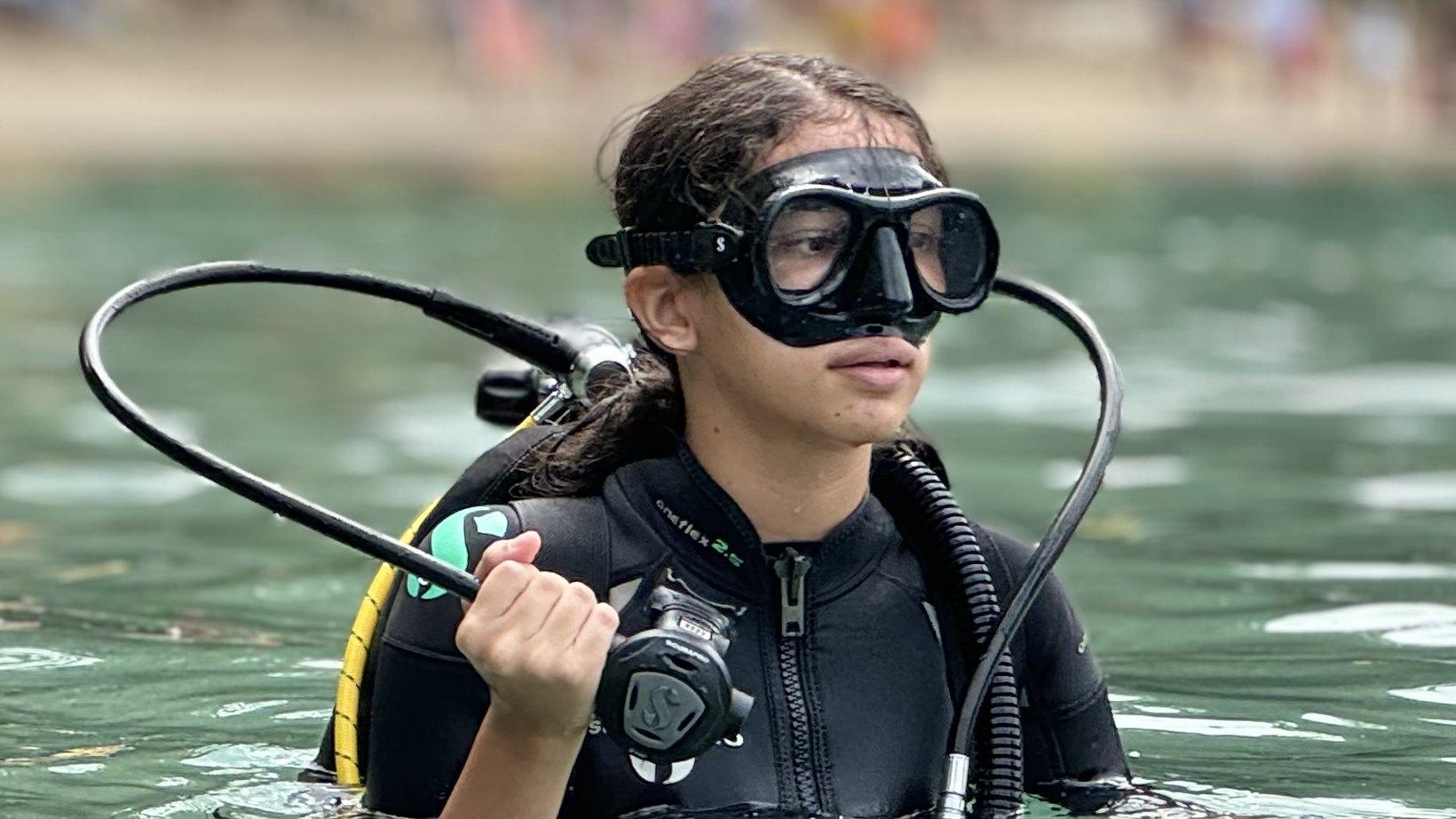
PADI says it about any extra bottle: it only helps if you're comfortable with it and know how to use it. Adding gear without training loads you up with tasks right in the middle of an emergency. The safe way to feel what breathing underwater is like is Discover Scuba Diving: you don't need a certification, the instructor explains the basics, gives you the gear and stays by your side from start to finish.
Which alternate air source is best for scuba diving?
You already carry the first one: the octopus, the spare second stage on your regulator, which is there for sharing air with your buddy. For a diver with a single tank, PADI considers it required equipment.
If you also want a small bottle, you can carry it on the back of your BCD, right against the tank, with a holder to keep the second stage close, and always with the valve open. I would put its gauge on the right side, so its hose doesn't get in the way of your main regulator's gauge hose. For a deep diving course, I wouldn't pick the one-liter bottle: SMACO makes a two-liter one, and that one could work.
If you go through a lot of air, my recommendation is an extra aluminum tank of 5.5 liters, or 40 cubic feet. It's light and doesn't throw you off balance underwater. You fit it with a regulator on a 1 m (39 in) hose, like the octopus hose, and a gauge on a short hose, like the ones technical divers use.
But don't think you're going to finish the dive on that tank. If what you run short of is air, what you need is a bigger main tank than the typical aluminum one of 80 cubic feet, or 11 liters, that you see at almost every dive center.
And in my own recreational diving, I don't carry an extra bottle. I prefer a good gear check and excellent air management: I start going up in good time, let my buddies know and reach the safety stop with air to spare.
From a mini tank to scuba diving in Portobelo
At Panama Dive Adventure, in Portobelo, we dive with full gear, octopus included, and with an instructor at your side. If you want to feel what breathing underwater is like, Discover Scuba Diving costs $120 with the gear included, from age 10. And if you like it, Open Water costs $540, including the eLearning theory, the certification and the gear.
We head out every day at 8:00 am from the dive center and come back around 1:00 pm. Courses have at most six students per instructor, in Spanish or in English. If you'd rather stay at the surface, the snorkel trip costs $65 per person. And if the underwater selfie is your thing, photos and video are already included in the trips. Message us on WhatsApp and we'll plan your day.
Sources
- PADI: scuba tanks, reserve bottles of 1 to 4 liters, visual inspection and hydrostatic test
- PADI: what is in a scuba tank (air, not pure oxygen)
- PADI: diving physics, 4 atmospheres at 30 m (100 ft) and not holding your breath
- PADI: how to ascend and descend safely, 18 m (60 ft) per minute and the safety stop
- PADI: redundancy, when one tank is not enough (octopus required, and training)
- PADI: regulators and the alternate air source
- PADI: can you scuba dive without a certification?
- PADI: Discover Scuba Diving FAQs
- My video (in Spanish): Cuando Oh Oh pasa, cómo equiparse y prepararse para situaciones sin aire
- My video (in Spanish): Esto cambiará tu buceo
- My video (in Spanish): 7 tips no muy conocidos para buceo profundo