Gear
What scuba gear to buy first and what to rent
By Álvaro Silva · · 10 min read
The first six pieces I'd buy are, in this order, the mask, the dive computer, the surface marker buoy, an action camera, the wetsuit and the regulator. You can keep renting the BCD, the weights and the tanks at the dive center. I've been an instructor for more than 35 years, I've certified more than 5,500 people, and I've seen a lot of divers spend several times the price of a set of gear on rentals. Owning your gear isn't a luxury: you dive much more comfortably, everything fits you and you know it's clean.
Video in Spanish
What scuba gear should I buy first?
Buy these six pieces first, in this order: mask, dive computer, surface marker buoy, action camera, wetsuit and regulator. They're the most personal pieces and the ones that make the biggest difference to your comfort underwater.
There are two reasons to have your own gear. The first is comfort: whatever you buy will be your size. The second is health. Some pieces have to be clean and spotless, and the most important ones are the mask and the regulator: one sits right against your nose and the other goes in your mouth.
This is my list, with what to look for when you buy each piece and what you can keep renting:
| Piece | Why | What to look for | Buy or rent |
|---|---|---|---|
| 1. Mask | The comfort of the whole dive depends on it, and for hygiene it's very personal | A comfortable fit, with no water getting in | Buy |
| 2. Dive computer | It shows your depth, your dive time and your no-decompression limit, and it keeps your logbook | Easy to read, with a battery you can change yourself | Buy |
| 3. Surface marker buoy | It's cheap, and it lets the boat see you at the surface | Fits in a BCD pocket and inflates by mouth | Buy |
| 4. Action camera | It keeps your memories so you can share them | Original housing, with buttons that don't fail | Buy, if you want to film |
| 5. Wetsuit | It's your second skin: it protects you from the cold, from chafing and from marine life | A snug fit, as thick as you need to stay warm | Buy |
| 6. Regulator | It's what lets you breathe underwater | Delivers air smoothly and holds up to use | Buy |
| BCD | For hygiene, it isn't as important as the regulator | Ask for one in your size | Rent |
| Weights and belt | The dive center provides them | No need to travel with them | Rent |
| Tanks | The dive center has them | You only need your own in technical diving | Rent |
How much does it cost to rent scuba gear, and what should you rent?
At our dive center in Portobelo, full gear rental costs $45 a day. The pieces worth renting are the BCD, the weights with their belt, and the tanks.
Do the math. Say you're a diver who loves the sport and you do about 40 dives a year. Multiply $45 by every day you dive, and you'll see that by the end of the year the money that went into rentals could already have bought a good part of your gear. Spend that money on the gear you really need.
Why isn't the BCD on my list? Because, for hygiene, it isn't as important as a regulator. The weights and the belt come from the dive center, and so do the tanks. Only if you move into technical diving later will you need your own tanks: to set up your doubles, and for your stage and decompression bottles.
How do you choose a scuba mask?
The best mask for you is the one that fits comfortably and doesn't let water in. For me it's the most important piece of gear, and also the most personal.
How comfortable a dive is depends, literally, on the mask. If water seeps in little by little, you spend the dive clearing it. It's a pain: it breaks your concentration, it keeps you from seeing the reef, and you can even lose sight of your buddy and have to go looking for them. And you've surely noticed it already: at many dive centers the mask is exactly the piece they spend the least on. We do invest in good masks, but I still encourage you to get your own.
Then there's hygiene. Underwater you produce a fair amount of mucus, and you have to clear it out of your nose. Nobody wants that happening in a rented mask.
I've used the same mask for many years. It's like an old pair of jeans: as comfortable as it gets, and if it fails one day, I'll buy another one just like it. I won't tell you which one, because the one that fits me doesn't have to fit you.
If you wear glasses, look for a two-lens mask: those can be fitted with prescription lenses. And if you need reading glasses, like I do, there are small stick-on lenses for the bottom of the mask glass so you can read your computer.
What is a dive computer and which one should you buy?
A dive computer tells you how deep you are, how long you've been down and where you stand on your no-decompression limit. Buy one that's easy to read and that lets you change the battery yourself.
It doesn't matter whether you wear it on your wrist or in a console. What matters is that you watch those numbers yourself, above all the no-decompression limit: you can't rely on someone else to keep track for you.
Renting computers gets annoying too: every dive center hands you a different one, with different settings and a different screen, and you keep having to ask how it works. With your own, you keep your logbook: you download your dive profiles to an app and add your own notes. The smaller ones also work as a watch.
If you travel, pay attention to the battery. Mine takes AA batteries, which I can find anywhere. Many times I've seen watch-style computers that take lithium batteries, which aren't as easy to find, and a battery you can't find cuts your diving short.
And ask about the warranty. The depth sensor on my computer failed after 1,800 dives. I wrote to the manufacturer, they asked me to send it from Panama to Canada, and seven days later someone knocked on my door with a box: inside was a new computer. So before you buy, find out how good the after-sales service is. PADI gives the same advice: buy from an authorized dealer so the warranty is honored.
What is a surface marker buoy used for?
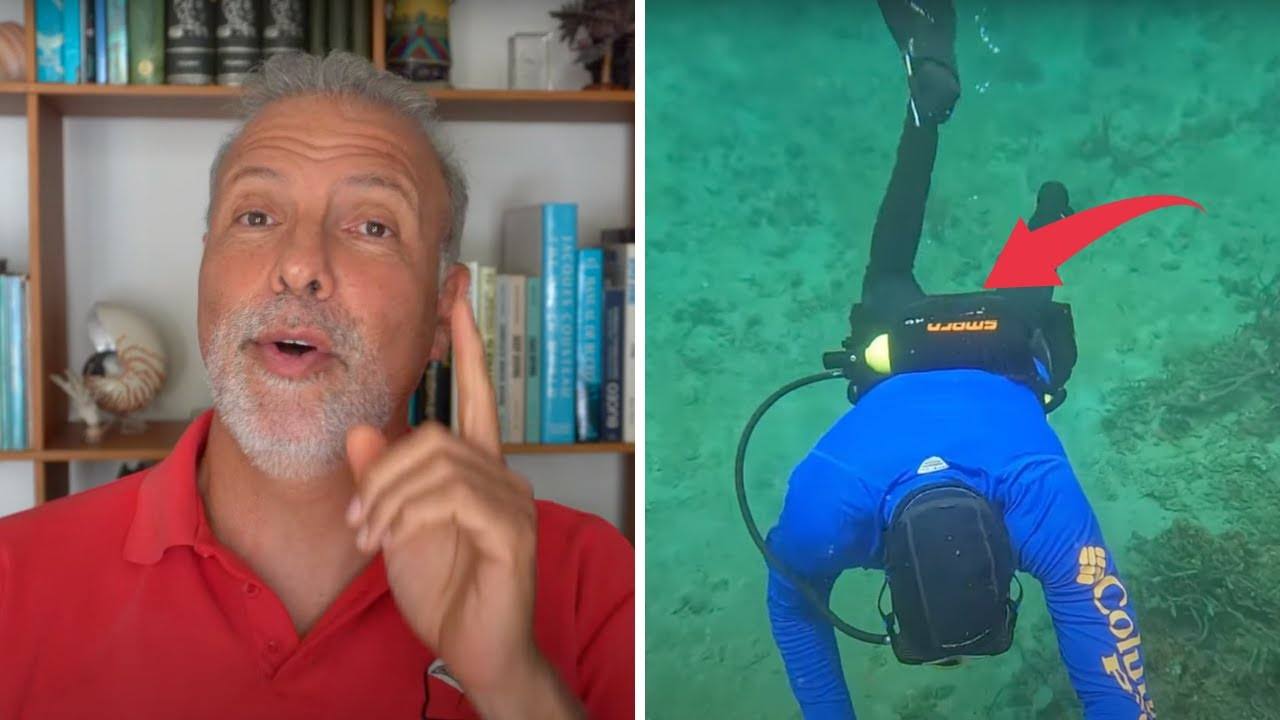
A surface marker buoy lets the boat spot you easily when you dive in open water. It's the cheapest piece on the list, and it fits in a BCD pocket, rented or your own.
You can inflate it by mouth. Several agencies now ask for it as part of the standard gear, and PADI recommends always carrying at least two signals: a visual one, like the buoy, and an audible one, like a whistle.
In Portobelo the buoy is essential because of the way we dive. The captain knows where we go in, roughly where we're going to come out and how long we'll be down. When we send up the buoy, he's already looking for it. That way, when we finish the safety stop and reach the surface, the boat is right beside us.
Check it before every trip. PADI advises checking that it inflates and holds air.
What camera should you buy for scuba diving?
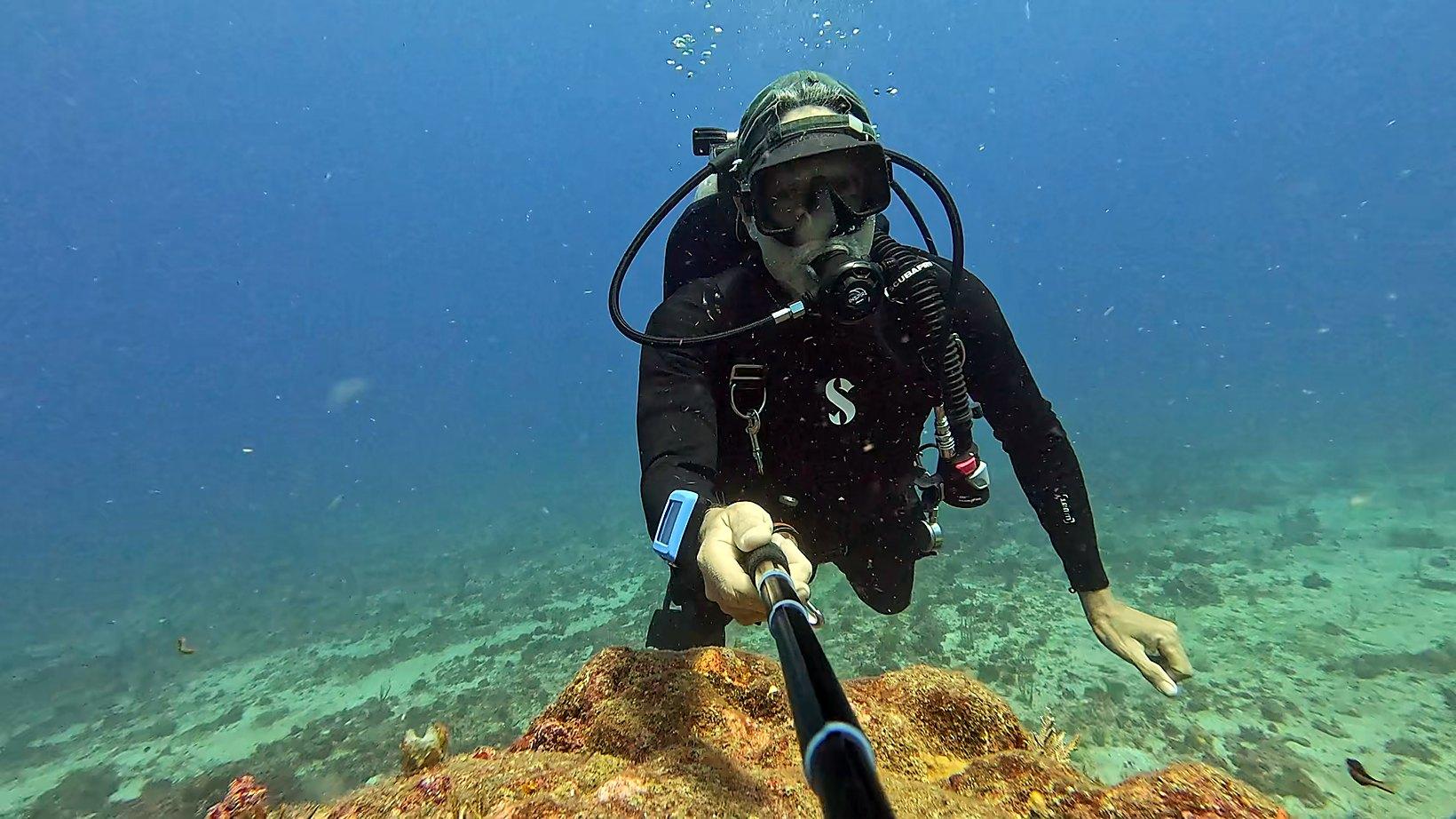
To start, an action camera. It's the piece that keeps your memories, and these days it has revolutionized every adventure sport.
I shoot every diving video I publish with action cameras. Being able to take your memory with you, move it to your phone or your computer and share it with your friends is priceless. I'm not a professional cameraman or photographer, but I do consider myself a professional at keeping memories.
Here are two tips I've learned over the years:
- Use the original housing for your camera. With other housings the buttons fail, and it's happened to me.
- Carry a red filter. With it, your camera brings back the colors of the reef.
What wetsuit should you buy for scuba diving?
Buy a wetsuit that fits snug, like a second skin, and as thick as you need to stay warm: 3, 5 or 7 millimeters. Nobody knows better than you how cold you get underwater.
The wetsuit protects you from marine life, from the BCD rubbing on your skin and, above all, from the cold. Whether you live in a country with four seasons or in a tropical one like Panama, you're going to need it.
For me the wetsuit has to be personal, and there's a saying among divers that explains why: there are two kinds of divers, the ones who pee in their wetsuit and the liars. On the first dive you might hold it, but on the second, the third or the fourth, it depends on the day. Think about that before you put on a rented one.
Here in Portobelo the water is warm all year, and I dive in a 2.5-millimeter shorty, sometimes with a rash guard underneath to protect me from the sun. It's like putting on shorts and a T-shirt, and it fits in any suitcase.
What scuba regulator should you buy?
The regulator is the crown jewel, the piece that lets you breathe underwater. Look for one that delivers air easily and is built to last.
If you've dived with a lot of rental regulators, ask yourself whether you've ever breathed from a top-of-the-line one. Rental regulators are usually the cheapest, simplest models in each line, built to last, although some in that range also breathe very well.
I say this with confidence. At a fish farm where I've worked as a consultant and diving instructor, the regulators get between 500 and 600 dives a year, and the divers don't look after them the way you'd look after your own gear. Many brands have passed through there, and only a couple of models stood up to that kind of beating. They also keep records there, and the numbers say regulators need servicing once a year. That matches what PADI recommends: service every year or every 100 dives, whichever comes first.
And don't worry about the weight. Many airlines now restrict baggage, but these six pieces fit in a carry-on, with the computer most likely on your wrist and the regulator coiled up. That way, even on a three-day business trip, you can stay over the weekend to dive.
Scuba gear in Portobelo
At Panama Dive Adventure, in Portobelo, the Open Water course costs $540 and includes the PADI eLearning theory, the certification and the gear. Discover Scuba Diving costs $120, also with the gear included. To get started, you don't need to buy anything.
If you're already certified, full gear rental costs $45 a day. Dive & Chill costs $110 and the gear is extra; on the guided night dive, at $65, you can rent a flashlight for $10. Photos and video of our trips are already included, so you don't need a camera to take the memories home either.
We head out every day at 8:00 am from the dive center and we're back around 1:00 pm. If you have questions about what to bring and what to rent, message us on WhatsApp before you come.
Sources
- PADI: buying your own scuba gear, advantages and practical advice
- PADI: 10 tips for buying scuba gear (authorized dealer and warranty)
- PADI: how often to service scuba gear (regulator and buoy)
- PADI: surface signaling devices
- PADI: how much scuba gear costs and what is usually rented
- My video (in Spanish): Mi equipo de buceo
- My video (in Spanish): Mi equipo de buceo 2022
- My video (in Spanish): Mejor equipo de buceo viajero 2020
- My video (in Spanish): 3 nuevos accesorios de buceo