Safety
Can I scuba dive with asthma, on my period or with glasses?
By Álvaro Silva · · 10 min read
You can scuba dive with many health conditions, but the go-ahead comes from a doctor, not from the instructor. Before any course you fill out a medical questionnaire, and if you answer yes to anything, you see a doctor before you get in the water. In more than 35 years as an instructor I've been asked every kind of question: Álvaro, can I dive when I have my period? What about the sharks? Several subscribers asked me to talk about patent foramen ovale, so I invited a cardiologist onto my channel. Here it is, case by case, with what PADI says.
Video in Spanish
Can I scuba dive with asthma or high blood pressure?
It depends on your case, and a doctor decides that before you get in the water. That's how it works with asthma, with high blood pressure and with any heart or lung problem.
Every PADI student fills out a medical questionnaire before the course: the one from PADI and the UHMS, the Undersea and Hyperbaric Medical Society. If you answer no to everything, you sign and you start. If you answer yes to anything, you take the form to your doctor, who examines you and signs to say whether or not you're fit to dive. A yes isn't a no: it's a doctor's visit.
The questionnaire has ten questions, and some of them lead to a more detailed list. These are the topics, in our own words:
| Topic | What it asks |
|---|---|
| Lungs and breathing | Asthma, lung problems or breathing problems |
| Heart and circulation | Heart, blood pressure or circulation problems, chest pain or a stroke |
| Fitness | Whether moderate exercise is hard for you, like walking fast or swimming a few minutes nonstop |
| Ears, nose, eyes and teeth | Ear, sinus, eye or dental problems |
| Surgery | An operation in the last year, or discomfort from an earlier operation |
| Nervous system | Fainting, seizures, migraines or a hard blow to the head |
| Mental health | Treatment for anxiety, panic attacks, depression or addiction |
| Back and other conditions | Diabetes, a hernia, ulcers or back problems |
| Stomach | Stomach or intestinal problems, including recent diarrhea |
| Medications | Whether you take prescription medications |
| Over 45 | Whether you smoke or vape, have high cholesterol or high blood pressure, or a close relative had heart problems before 50 |
| Pregnancy | If you're pregnant or trying to get pregnant, you don't dive |
What if I answer yes on the scuba medical questionnaire?
You take the complete form to your doctor, who examines you and marks whether or not you're fit to dive. Without that approval, the course doesn't start.
Answer everything honestly: when you sign, you accept responsibility for anything you left out. If you're a minor, your dad, your mom or your guardian signs. And if you have a health question that isn't on the form, ask your doctor about it before you dive.
Can you scuba dive with a PFO (patent foramen ovale)?
That answer comes from your cardiologist, and it's more common than you think: according to PADI, more than one in four adults has a patent foramen ovale, or PFO.
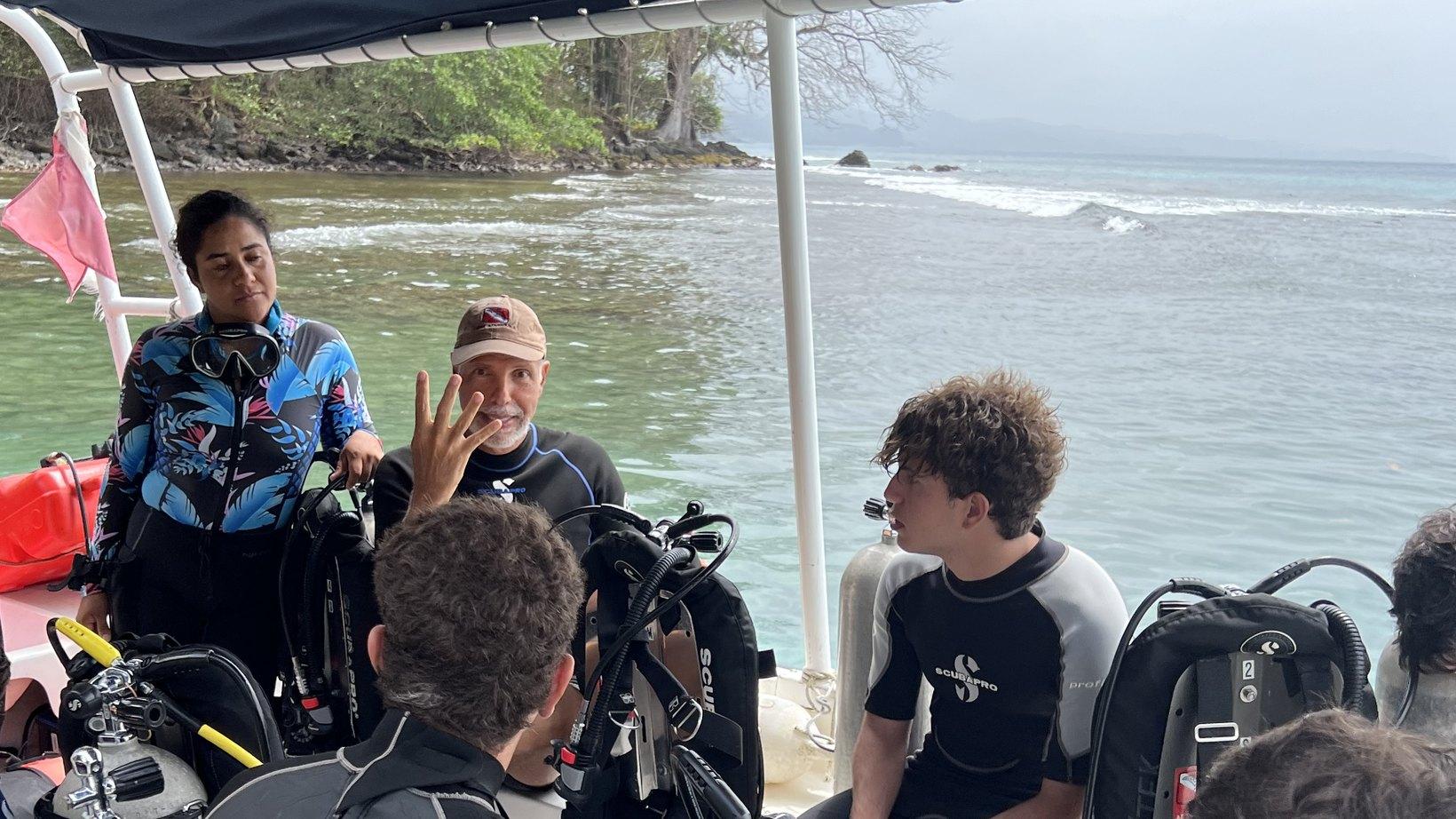
Several subscribers asked me about this topic, and YouTube gave me a gift: Dr. Paulina, a cardiologist from Viña del Mar, in Chile, came to dive with us for a week, morning, afternoon and night. Between dives, she explained it to me on my channel.
The foramen ovale is an opening between the two atria of the heart, and a baby needs it before it's born. After birth it closes, but in some people it stays open. I asked her whether anyone is going to die from having it, and she told me probably not: in most cases it's harmless.
In diving, the issue is the nitrogen bubbles that stay in your blood after a dive. With the foramen open, some of them can cross from the right side of the heart to the left without going through the lungs, which are the filter, and that can cause decompression sickness.
Do you need to get tested? That's something you decide with a cardiologist you trust. The doctor explained that there are several tests to detect it, and PADI advises talking it over with a physician, especially if you've ever had decompression sickness with serious neurological symptoms, or skin symptoms that keep coming back.
Can you scuba dive on your period?
Yes. According to PADI, you can dive on your period, and there's no evidence that it raises the risk of a shark attacking you.
It's one of the questions women ask me most, especially in the Open Water course: if it's that time of the month, are the sharks going to attack me? No, they're not going to attack anything. I don't know of a single case of a woman diver attacked because of it. There's no problem with tampons or with a menstrual cup either: each woman decides what to use.
If your period isn't painful, you can dive without worrying. If it hurts or you feel uncomfortable, stay out of the water that day, because diving is meant to be enjoyed. And I ask the men in the group for empathy: if it catches a fellow diver by surprise, help out and make sure she doesn't feel embarrassed under any circumstances. It's a natural cycle of the body, no problem at all.
Can I scuba dive while pregnant or with breast implants?
Pregnant, no: PADI recommends not diving during pregnancy or while you're trying to get pregnant. With silicone implants, yes, once you've recovered from the surgery.
During pregnancy the body changes a great deal, and the baby's health has to come first. After the birth, you go back in the water with your doctor's approval. In diving families everybody knows what comes next: the baby gets little diver clothes, little diver shoes and little diver hats as gifts.
Breast implants aren't an issue. According to PADI, they're not a problem for gas absorption and they don't stop you from diving once the recovery time has passed. PADI only advises avoiding very tight straps across the chest. Remember that an operation in the last year goes on the medical questionnaire, so that one goes to your doctor.
Can you scuba dive with contacts or glasses?
Yes. You can dive with soft contact lenses, with a prescription mask or with magnifying lenses that stick to the inside of the mask. Your everyday glasses don't go under the mask.
According to PADI, underwater everything looks a third bigger and closer, so if you're mildly nearsighted you may not need anything. The test is simple: if you can't read the numbers on your pressure gauge and your dive computer without glasses, you need correction.
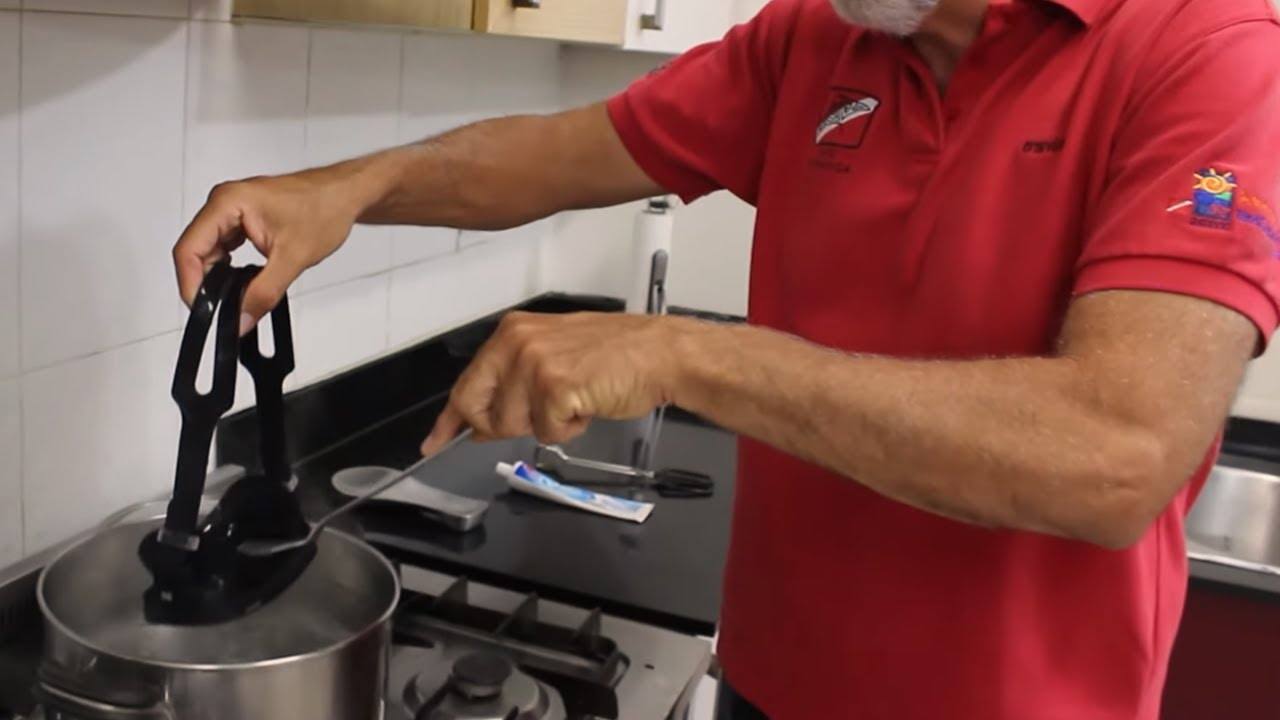
It happened to me with presbyopia: I could no longer read the small print on my dive computer or on the camera screen. A lot of people told me: Álvaro, get some contact lenses. But with all the diving I do in a week, I can't imagine the budget. I tried a friend's mask with some small lenses stuck to the bottom of the glass, and when I put it on, high definition was back. With them I can read my instruments and my compass again.
If you wear contact lenses, this is what PADI recommends:
- Wear soft lenses. Hard lenses don't let gas through, and they can blur your vision or be uncomfortable.
- Close your eyes when you flood your mask or take it off during the course skills, so you don't lose them.
- Let your instructor know that you wear contact lenses.
- Carry spare lenses in your dive bag.
- If you had eye surgery recently, that goes on the medical questionnaire.
Can I scuba dive with a cold or a toothache?
With a cold, no. The medical questionnaire itself says so: if you're sick, don't dive. And with a stuffy nose it's very hard to equalize your ears.
According to PADI, a cold or an infection can block the middle ear and the Eustachian tubes, so the right thing is to wait until you feel better, or to see your doctor if it doesn't clear up. I say it in my video about ears: with a cold you don't go in the sea, no matter how much you want to.
For your teeth, the rule is to get to your trip with them healthy. I learned it the hard way: after a dive I felt something strange in my mouth, ran my tongue over it and found something sharp. A molar had broken. Since then I go to the dentist twice a year for my cleaning, and I save myself a lot of trouble. I don't want to imagine a toothache in a country that isn't your own, looking for an emergency dentist.
If you're still recovering from recent dental work, that goes on the medical questionnaire. And underwater, relax your bite: you hold the regulator with your teeth, you don't bite down on it.
Can you scuba dive after drinking alcohol?
No. If there was a party last night, there's no diving today: the party calendar goes one way and the diving calendar goes the other.
According to PADI, alcohol slows your reflexes, clouds your judgment and takes away your coordination, the very things you need if an emergency comes up underwater. It also dehydrates you, and dehydration raises the risk of decompression sickness. And there's something that worries me a lot: a hangover brings tiredness, headache and nausea, which are also symptoms of decompression sickness. With a hangover, you can't tell which is which.
A lot of people tell me: Álvaro, but it was just one beer. I don't do it, because I take my job very seriously, and PADI goes further: it says even a single drink between dives is a bad idea. As an instructor, I don't take anyone into the water who shows up after drinking, because they put the whole group at risk.
What does help is showing up well hydrated. And if you feel the urge to pee underwater, relax: it happens to everybody and it's called immersion diuresis. According to PADI, the water pressure and the cold push blood toward the core of your body, and your kidneys respond by making urine. Don't stop drinking water to avoid it, because diving dehydrated is never a good idea. Pee before you get in the water and stay warm: if you get cold, you're sure to pee.
Health and scuba diving in Portobelo
At Panama Dive Adventure, in Portobelo, before any course or dive you answer our health questions, based on the PADI and UHMS medical questionnaire. If you answer yes to anything, bring the evaluation signed by your doctor, and if you have doubts, message us on WhatsApp beforehand and we'll talk it over. We also recommend traveling with insurance that covers diving accidents.
Discover Scuba Diving costs $120 with the gear included, and Open Water costs $540 with the eLearning theory, the certification and the gear. We head out every day at 8:00 am from the dive center and get back around 1:00 pm. Courses have no more than six students per instructor, in Spanish or in English. Show up rested, with no alcohol and well hydrated, and let's go dive, dive and dive.
Sources
- PADI and UHMS diver medical questionnaire, in Spanish (PDF)
- PADI: scuba certification FAQ (medical questionnaire and pregnancy)
- PADI: diving with a patent foramen ovale (PFO)
- PADI: diving with sharks on your period
- PADI: pregnancy and diving
- PADI: women's health in diving (breast implants)
- PADI: scuba diving with contact lenses or glasses
- PADI: ear equalization and diving with a cold
- PADI: why alcohol and diving do not mix
- PADI: the urge to pee while diving (immersion diuresis)
- PADI: peeing in your wetsuit, myths and dehydration
- My video (in Spanish): Mujeres vs. hombres en el buceo
- My video (in Spanish): El buceo y el alcohol
- My video (in Spanish): ¿Por qué las ganas de orinar buceando? (y qué hacer al respecto)
- My video (in Spanish): No te rompas los dientes buceando
- My video (in Spanish): Cómo evitar que tus oídos arruinen tu buceo
- My video (in Spanish): 3 nuevos accesorios de buceo